MDB Results 2026 · Nigeria · Day 2 of 6
Kofi and His Mother Go to the Palace
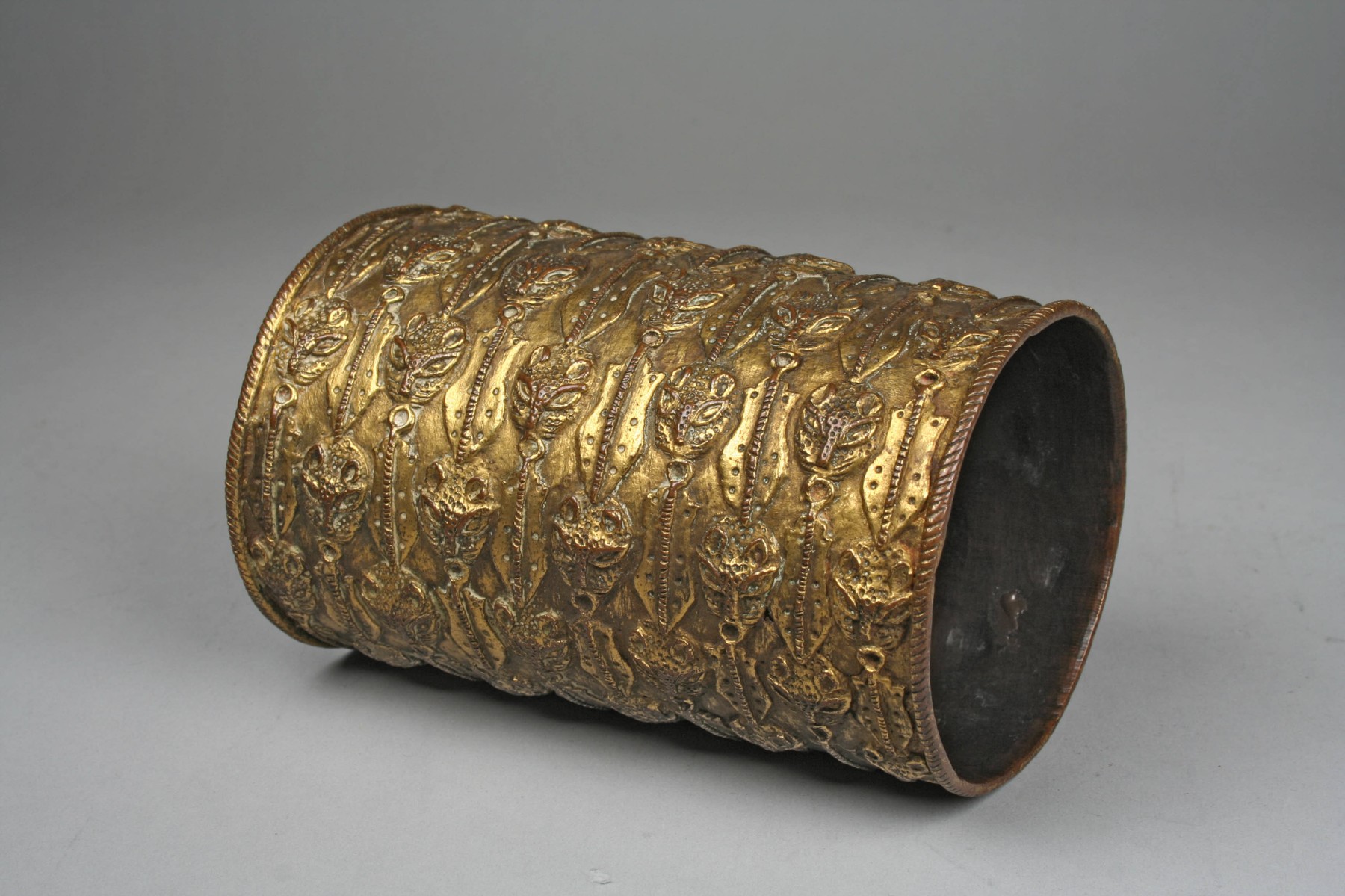
In the morning his mother said they were going to the palace.
Kofi had imagined a palace. He had seen palaces in books — European ones, with white marble and tall gates and flags. He had seen photographs of Buckingham Palace, and the Palace of Versailles, and the ones in India with their domes and their gardens. He had a fairly settled idea of what a palace looked like.
The Oba’s palace in Benin City was not what he had imagined.
They arrived at the outer wall. Red earth. Thick, ancient. The kind of wall that did not announce itself or try to impress. It simply stood there, the way things that have been standing for centuries tend to stand — without needing to explain themselves. There was a gate. There were guards. And beyond the gate, visible in glimpses, a world that was not the city outside.
They parked and walked to the edge of what visitors could reach. A guard in uniform sat on a low bench in the shade. He looked at Kofi the way that adults in this country often looked at children — as if they were a serious matter.
“You want to enter?” the guard said.
“We wanted to see,” Kofi’s mother said. “Just to see.”
The guard nodded slowly. Not a yes. Not a no. A nod that meant: this is understood, and the matter is more complicated than you know.
“The Oba is not receiving today,” he said. “Not without arrangement. Not without chiefs.”
“I understand,” his mother said. “My son just wanted to see the palace.”
The guard looked at Kofi again. Then he stood up, very slightly, and gestured with his head toward the outer courtyard.
“You can stand there. You can look.”
So they stood there. And Kofi looked.
It did not look grand, in the way he had expected grandness to look. There was no gold. No marble. No sweeping staircase. What there was instead was something he did not have a word for at seven years old — though he would have one later. Authority. Everything here existed because the system around it believed in it. The red earth walls. The carved doorframes. The quiet movement of men in coral beads at the edge of the inner courtyard, moving with a purpose that suggested they had somewhere specific to be and they had always known where that was.
“Mama,” Kofi said. “How old is this place?”
“The kingdom is more than six hundred years old,” his mother said. “One of the oldest in West Africa. The palace has been here almost as long.”
“Who lives here now?”
“The Oba. Ewuare the Second. He is the king and the spiritual head. He is not a ceremonial figure — not like the Queen of England was. He is still the centre of something real.”
“Can we meet him?”
His mother smiled. “Not today. You must go through chiefs. You must have a reason. You must observe protocol. The Oba does not receive people the way you receive guests at home. He appears at festivals. The Igue festival — late December, early January — that is when you might see him. In full regalia, with the chiefs assembled. But even then, you see him from a distance. You witness, you do not meet.”
“Is that bad?” Kofi asked.
“It is different,” his mother said. “It is a different idea of what authority looks like. Here, the distance is part of the meaning.”
The guard had come to stand near them. Not intrusively. Just present.
“The boy is interested,” the guard said. It was not a question.
“Very,” said his mother.
“What is inside?” Kofi asked. “Behind the wall.”
The guard was quiet for a moment. Then he turned and looked at the wall himself, as if he were seeing it fresh.
“Many courtyards,” he said. “Each one has a purpose. Some are for chiefs. Some are for rituals. Some are for storage. Some are shrines. You do not just walk from one to the next. You must have permission. You must have rank. The deeper you go, the more restricted it becomes. Most people never pass the outer areas. Even many chiefs cannot enter the innermost spaces.”
“What is at the very centre?” Kofi asked.
“The ancestral altars,” the guard said. “Every Oba who has ruled is remembered there. Not in photographs. In bronze. In ritual. In ceremony. The present Oba — Ewuare the Second — he is the fortieth. Forty Obas in direct succession, father to son, going back more than six hundred years. Each one remembered. Each one honoured. You cannot rule here without carrying all of them with you.”
Kofi thought about this. Forty. He tried to count back in his own family. He could get to his grandfather. After that it became uncertain.
“Do they look like kings?” he asked. “Inside. The people you can see.”
“They look like men who know exactly where they are and what they are doing,” the guard said. “That is what authority looks like from the inside. Not the uniform. The certainty.”
The guard looked at Kofi. “You know what was here? Before the British came?”
“No,” Kofi said.
“A palace bigger than this. Many more courtyards. Hundreds. Each one with a purpose — for chiefs, for rituals, for storage, for shrines. There were bronzes everywhere. Plaques on the walls. Statues. Things that had been made here for five hundred years by craftsmen who were the best in all of West Africa. Things that had never been seen anywhere else in the world.”
“Where are they now?” Kofi asked.
The guard looked at him steadily. “In 1897, the British came. They called it a punitive expedition. They burned the palace. They took everything. Three thousand pieces, some say more. The bronzes went to London. To Berlin. To New York. To museums in countries where no one in the museum made them.”
Kofi thought about this for a long time. The wall in front of him. The red earth. The men in coral beads moving quietly beyond it.
“And they didn’t give them back?”
“Germany gave some back,” the guard said. “In 2022. The British Museum still has them. They say they are keeping them for the world.”
“But the world is here,” Kofi said.
The guard looked at him for a moment. Then he laughed — a short, real laugh.
“Yes,” he said. “The world is here.”
The Kingdom of Benin is one of the oldest and most sophisticated pre-colonial states in West Africa, with a continuous royal dynasty dating back to the 11th century. At its height, the Benin Empire stretched across what is now southern Nigeria and into parts of Ghana and Togo. Its capital, Benin City, was a planned urban centre with wide streets and an elaborate system of earthworks — one of the largest in the pre-industrial world.
The Benin Bronzes — actually made of brass and copper alloy — were produced by specialist guilds of royal craftsmen from the 13th century onwards. Thousands of plaques, statues, and ceremonial objects documented the history and rituals of the kingdom. In 1897, British forces mounted a punitive expedition, burned the palace, deposed the Oba, and removed an estimated 3,000 to 5,000 objects. These are now held in the British Museum (900+ objects), the Ethnologisches Museum in Berlin (530+), the Metropolitan Museum in New York, and institutions across Europe and North America.
The current Oba, Ewuare II, has been on the throne since 2016. He is the 40th Oba in a direct line of succession. The palace has been rebuilt on its original ground and the ritual structures — the palace societies, the chief hierarchy, the ceremonial calendar — remain active. The Igue festival, the most important public ceremony, takes place in late December and early January.
They stayed a little longer. The guard went back to his bench. A man in coral beads crossed the outer courtyard without looking at them. Somewhere inside, far back beyond the visible walls, something was being attended to that had been attended to for six centuries and would be attended to long after they left.
“Mama,” Kofi said. “The World Bank. Does it know this is here?”
His mother was quiet for a moment.
“The people in the Bank know about Nigeria,” she said carefully. “They know the statistics. The poverty rate. The unemployment rate. The oil revenue. The infrastructure gap.”
“But this,” Kofi said. He gestured at the wall. The guard. The quiet behind the gate. “This specific thing.”
“This specific thing,” his mother said, “is harder to put in a project appraisal document.”
Kofi nodded slowly. He was thinking about what the guard had said. The world is here. And about what the genies in Washington had told him — numbers, gaps, ratings, ships. He was beginning to understand that there were two different kinds of knowing, and that both of them were real, and that the distance between them was part of the problem.
They walked back to the car. The city was loud around them again immediately — motorcycles, music, generators, the ordinary noise of two million people. The palace wall stood behind them, red earth, patient, holding its own knowledge quietly.
“Tomorrow,” his mother said, “we will meet Toju. He will tell you about a project. What the Bank funded. What it built. What it cost. And what happened to the man who documented it.”
“Is it a good story?” Kofi asked.
“It is a true story,” his mother said. “Which is better.”