MDB Results 2026: An Independent Assessment — Day 6 of 7
The Carnival Ship
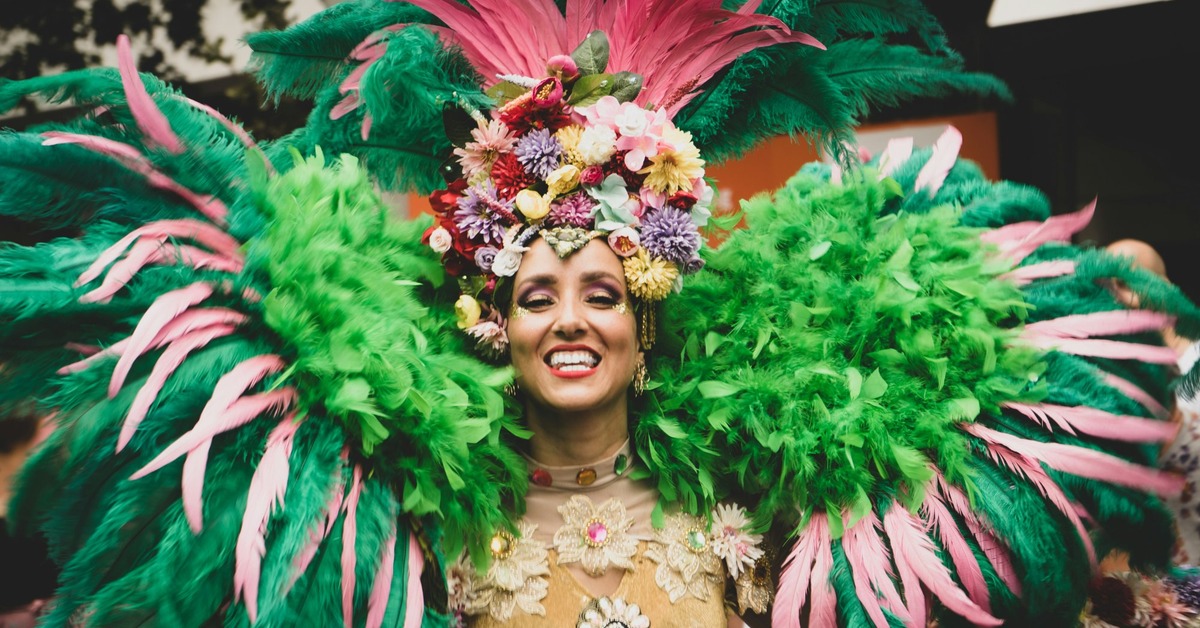
In Manila, Kofi’s father had told him that his next meeting was with the Inter-American Development Bank.
He was looking forward to Rio or Buenos Aires.
Instead he was back in Washington.
He had not expected that.
They turned a corner and Kofi heard it before he saw it.
Music.
Not lobby music. Not the kind that plays quietly to make people feel calm while they wait. Something with a pulse to it. Brass and percussion and underneath it something that moved your feet even when you were sitting still. It was coming from a building that had apparently decided that grey was not a colour it recognised.
The building was marble. A great deal of marble. The kind of marble that makes a statement. Flags of twenty-six countries along the front. A lobby visible through the glass that was soaring and grand in the way that lobbies are grand when the people who designed them wanted to make sure you understood you had arrived somewhere.
“What is this?” Kofi asked.
“The Inter-American Development Bank,” his father said.
“It is very marble,” Kofi said.
His father said nothing. This was, Kofi had learned, a form of agreement.
Inside, the security staff were exceptionally courteous. More courteous, Kofi’s father remarked quietly, than the people at the airport. They signed in, received badges, and were given directions to an office on the fifth floor.
The directions were useless.
There were two fifth floors. Or rather, there was one fifth floor divided into wings designated NE and NW and SE and a further section that appeared to be numbered differently from all the others. Room 500NE and room 500NW were not near each other. They were not even in the same corridor. The corridors themselves did not run in straight lines. They zigzagged. They arrived at intersections that offered three options and no indication of which was correct.
Kofi and his father walked for some time.
“¡Oye!”
A voice from a doorway. A man leaning out — paper, like the others, numbers flickering across his surface — but different in his manner from any genie Kofi had encountered. Relaxed in a way the others had not been. Shirt slightly rumpled. An expression of genuine warmth that was also, just slightly, an expression of someone who had recently been at a party and was not fully back yet.
“¡Bienvenidos! You found us. ¡Qué milagro! — what a miracle. Everyone gets lost. Sixty-five years and we still cannot find our own rooms.”
He stepped into the corridor, shook hands with Kofi’s father, crouched to Kofi’s level, offered his hand with the same seriousness.
“Day Six,” the genie said.
“Day Six,” said Kofi.
“Come. I will show you the building. Then we will talk. But first — have you eaten?”
The genie led them not to an office but downstairs, to a room Kofi had not expected.
An art gallery.
Not a corridor with pictures on the walls. A proper gallery, with proper light, showing work from across Latin America and the Caribbean. Large canvases, vivid colour, faces and landscapes and scenes that were clearly from a specific somewhere — not decorative, not generic, unmistakably from a particular place and a particular life.
Kofi stopped in front of a painting. A market. A woman carrying something large on her head. Behind her, a child.
“Where is this?” he asked.
“Haiti,” the genie said. “This room changes every few months. This month Haiti. Last month Brazil.”
“Last month Brazil,” Kofi said. “Was that during carnival?”
The genie smiled. A specific kind of smile. The smile of someone who has been asked exactly the right question.
“Ay, qué rico — yes, that was during carnival. Most of the office was in Rio. It was…” He paused, searching for adequate language. “It was what it always is. We came back last week. Some of us are still, how to say — recuperando. Recovering.”
“From the carnival.”
“Saudade,” the genie said. “That is a Portuguese word. It means — the ache for something wonderful that has ended. We have a lot of saudade in March.”
On a Friday evening, Kofi could hear — faintly, from somewhere above — music again. The building apparently did not fully stop on Fridays. The genie noticed him listening.
“The party spills onto the street,” the genie said, with a small shrug that contained an entire cultural position. “¿Y qué? — so what? We work hard all week. People are far from their countries. On Friday the salsa comes on and for two hours everyone is home.”
“Tell me about this ship,” Kofi said. They had found a bench near the Haitian painting. The genie sat beside him. His father stood slightly apart, looking at the art.
“This ship,” the genie said, “is different from all the others you have seen. The people it lends to own it.”
Kofi stopped.
“The borrowers own the bank?”
“Twenty-six countries in Latin America and the Caribbean. Together they hold just over fifty percent of the shares. The World Bank — the rich countries control it. The IMF — the rich countries control it. The ADB — Japan and the United States hold thirty-one percent between them. Even here the United States holds thirty percent. But the twenty-six borrowing countries of this region hold just over fifty percent. They built this institution. They run it. This is their ship.”
Kofi looked at the Haitian painting. The woman with something large on her head. The child behind her.
“The people in that painting — their country owns part of this bank.”
“Exactamente,” the genie said. Quietly, this time. Not a celebration. A fact.
“And the president? Also from the region?”
“Always. Sixty-five years. Every president Latin American.”
“Always?” Kofi had learned to listen for the pause after ‘always.’
“Almost always,” the genie said.
“Tell me about the almost.”
The genie shifted on the bench. Found his words.
“In 2020, for the first time, a president was appointed who was not from the region. An American, backed by a particular government in Washington that wanted influence over this institution. Two years later he was removed. An ethics investigation. A relationship with a subordinate. An irregular pay raise. The Board voted him out.”
“And then?”
“A Brazilian. Former central bank president. The tradition resumed.”
Kofi thought about this.
“So the one time the tradition broke —”
“It ended in scandal. No hay mal que por bien no venga — there is no bad from which good does not come. The region learned something. The presidency is not just a custom. It is a protection.”
“Protection from what?”
“From becoming someone else’s instrument.”
“But,” Kofi said. He had learned that everything at these ships had a but.
“Pero,” the genie agreed.
“Who owns the other fifty percent?”
“Non-borrowing countries. The United States, at thirty percent, is the single largest individual shareholder. It does not borrow. Certain decisions require a supermajority. The United States has an effective veto.”
“The biggest guest at the party,” Kofi said.
“Who does not need the food,” the genie completed.
They sat with that for a moment. From above, very faintly, the salsa continued.
The genie stood, gestured for Kofi to follow, and led him to the far end of the gallery. A smaller room off the main one. On Fridays, this was where the music came from — a space that had been quietly, unofficially, become the salsa room. Cleared floor. Someone’s phone connected to a speaker. Staff who were too far from Bogotá and too far from Salvador and too far from Kingston, dancing for forty-five minutes before the security staff gently suggested it was time to go home.
“This is not in any official document,” the genie said.
“I know,” Kofi said.
“But it is more true about this institution than most official documents.”
Kofi looked at the empty floor. He could hear the ghost of last Friday’s music in it.
“Now tell me the numbers,” he said.
They went back to the bench by the Haitian painting.
“The IDB has been publishing two numbers,” the genie said. “Every year. For over a decade. Both in official documents. Both available to shareholders.”
“Two numbers for the same thing?”
“Management rates its own projects. Eighty-one percent satisfactory. Then OVE — the independent evaluation office — validates the same projects independently. Fifty-three percent satisfactory. A twenty-eight point gap. Same projects. Same year. Every year.”
Kofi was very still.
“And the two numbers are not reconciled.”
“Not reconciled. Capital decisions are made on the management number. The eighty-one.”
“And the criterion that matters most — did the projects achieve what they were designed to achieve?”
“Twenty-seven percent, under independent assessment.”
“One project in four.”
“One project in four.”
“And when OVE says this, Management—”
“Management disputes the methodology. Every cycle. It does not provide a corrected figure that would close the distance. The dispute is a pattern, not a resolution.”
Kofi looked at the Haitian painting. The woman. The child.
“Did they ever evaluate the evaluation itself?”
The genie looked at him. Surprised.
“Sí. In 2024. OVE evaluated the entire Development Effectiveness Framework — sixteen years after it was launched. The finding: the technical instruments were built. The cultural change was not.”
“And,” Kofi said. He waited.
“After training workshops on how to write completion reports, the ratings began clustering just above the threshold for Satisfactory. Just above it. Before the workshops, they did not cluster. After — they did.”
Kofi thought about this for a long time.
“They learned how to pass the test. Not how to improve the project.”
The genie said nothing. The numbers on his surface flickered.
From somewhere above them, faintly, the music was still playing.
“Is the carnival real?” Kofi asked. “Or is it — like Abidjan? Like the smile on every floor?”
The genie considered this with the seriousness it deserved.
“The carnival is real,” he said. “The saudade in March is real. The salsa room on Friday is real. The people in this building are genuinely passionate about this region in a way that is not performance. That is not curated.”
“But.”
“Pero.” He looked at his hands. “These people work hard. They care deeply — about this region, about these countries, about the woman in that painting. That is not in doubt. But when the music starts on Friday evening, it is not just the office. It is the whole continent calling. Brazil. Colombia. Jamaica. Honduras. Something shifts. The difficult conversation, the number that does not add up, the report that needs one more revision — it moves to Monday. Not because they do not care. Because the music is louder than the spreadsheet. Because for two hours they are not in Washington — they are home.”
He paused.
“And the record has been steady for a decade. The twenty-seven percent does not move much. And every Monday the work begins again, with full commitment, full passion. And on Friday the music comes on again. And the continent calls again.”
“Poco a poco,” Kofi said. Little by little.
“Poco a poco,” the genie said. And there was in his voice something that was not cynicism and not defeat. It was something more complicated. The voice of someone who loved the institution and understood its limitations and kept coming back on Monday anyway. “That is what we say. That is what we mean. Mañana — tomorrow — we will do better. We believe this. We have always believed this.”
“And the twenty-seven percent,” Kofi said gently. “Does it go up?”
The genie looked at the Haitian painting for a long moment.
“Todavía no,” he said. Not yet.
They walked back through the zigzagging corridors. They got slightly lost again. The genie did not seem bothered by this.
At the lobby — the grand marble lobby, slightly too grand, the kind of lobby that makes a statement — Kofi stopped and looked back at the building.
“It’s the best one,” he said.
“¿Perdón?”
“The idea of it. The people it serves own it. Their president. Their languages. Their art on the walls. Their music on Fridays.” He paused. “The idea is the best one.”
“Sí,” the genie said. “The idea is excellent.”
“But?”
The genie looked up at the building. The flags. The marble. The gallery on the second floor where Haiti was on the wall this month and next month it would be somewhere else. The salsa room where last Friday forty people had been briefly home.
“The idea is excellent,” he said again. “The results are… the results.”
Kofi nodded.
“ The day after the party the clean up has to start. People need jobs and better results from IDB. Only then will they truly enjoy the music.;
The genie did not answer. Above them, through the ceiling, very faintly — the music was still playing.
Tomorrow: all six ships. One ocean. And a child who has been to each of them and now has to decide what he thinks.
Day 1: The World Bank — The cruise ship
Day 2: The IMF — The battleships
Day 3: The IFC — The casino ship
Day 4: The AfDB — The dhow
Day 5: The ADB — The Atakebune
Day 6: The IDB — The carnival ship (this piece)
Day 7: The full picture
Full series at mdbreform.com