MDB Results 2026: An Independent Assessment — Day 5 of 7
The Floating Fortress
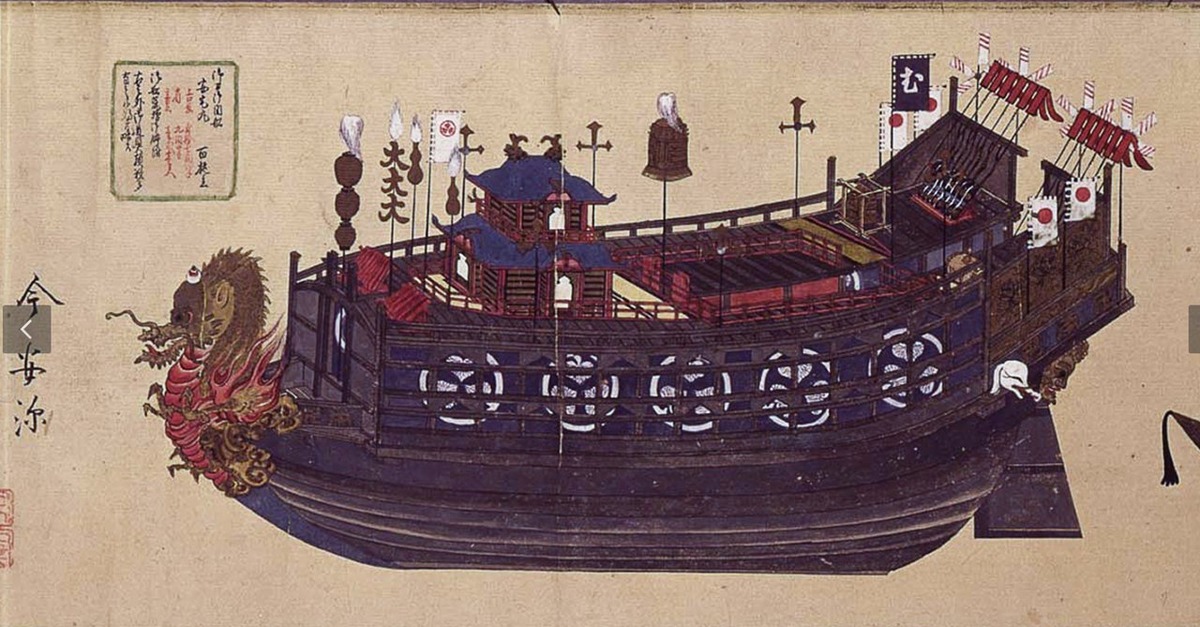
Manila arrived before Kofi was ready for it.
The heat was the first thing. Not like Washington — not the damp, organised heat of a city that knew it was important. This was a different kind of heat. Wider. Older. The kind that had been here long before any building and would be here long after.
The second thing was the smell. Street food and diesel and something sweet underneath it all that Kofi could not name but immediately liked.
“I like this place,” he said.
The genie was waiting at the arrivals gate.
He was different from the others.
He bowed. Not a long bow — a precise one. The exact angle required. No more, no less. Then he straightened and said:
“Konnichiwa, Kofi-san. Welcome to Manila.”
Kofi looked at him carefully. Pressed shirt. Every button placed with intention. He did not fill the space around him the way the other genies had. He occupied it carefully, like a man who had been told the dimensions of a room and had decided exactly where to stand.
“You’re Japanese,” Kofi said.
“Hai,” the genie said.
“But we’re in the Philippines.”
The genie smiled. A small, considered smile.
“Yes,” he said. “That is rather the point.”
He gestured toward the exit. Kofi followed.
“The food is excellent here,” the genie said, as they stepped into the heat.
“Is that important?” Kofi asked.
The genie considered this with the seriousness it deserved.
“Some days,” he said, “it is the best argument for the headquarters being here and not in Tokyo.”
The building appeared at the end of a wide avenue.
Kofi looked at it for a long time. He had learned by now to look carefully before asking. To turn his head slightly. To let the shape come to him rather than chase it.
“It’s not a cruise ship. The World Bank was a cruise ship.”
“Hai.”
“And not a battleship. The IMF was two battleships.”
“Hai.”
“And definitely not a casino. The IFC was the casino.”
“Hai.”
“And not a dhow. The AfDB was the dhow.”
The genie inclined his head slightly. As if Kofi had passed a test.
“Hai,” he said. “Not a dhow.”
Kofi studied the building. It was solid. Not soaring like the cruise ship. Not menacing like the battleships. Not curved and hopeful like the dhow. It sat on the avenue like something that had decided it was not going to be moved.
“It’s a fortress,” Kofi said.
The genie smiled. Just slightly. The precise smile of a man who had been waiting for exactly this moment.
“A floating fortress,” he said.
“But it’s not floating. It’s on the road.”
“All the best fortresses,” the genie said, “are on the road. That is how they control what passes.”
“What kind of ship is a floating fortress?”
The genie turned to face the building fully.
“The Atakebune,” he said. “Sixteenth century. Iron-clad. Oar-propelled. Not built for the open ocean — built for coastal waters. Built to control the sea around it. Not to explore. Not to carry passengers. Not to take risk. To hold ground.”
Kofi looked at the building with new eyes.
“Atakebune,” he said, trying the word.
“Hai.”
“And who built it?”
The genie looked at him for a moment.
“Japan,” he said. “Mostly.”
Inside was cool and ordered.
Not the curated hope of Abidjan. Not the enforced stillness of Washington. Not the controlled cold of 19th Street.
Just… ordered. Everything where it should be. Everything on time. Processes that ran exactly as designed. The kind of organisation that did not announce itself because it did not need to.
Kofi noticed it in the small things. The reception desk cleared of everything except what was needed. The corridor free of anything that had not been placed there deliberately. The staff who moved with the quiet efficiency of people who had been taught that doing something correctly the first time was not perfectionism — it was respect for everyone else’s time.
“It’s very… precise,” Kofi said.
“Hai,” the genie said. Not modestly. Just as a statement of fact.
“Is that the Japanese part?”
The genie considered this as they walked.
“The Japanese management tradition values process,” he said. “Not because process is the goal. But because a clean process makes the problems visible. If something is wrong, the system should show it immediately. Not hide it.”
“Does it work?” Kofi asked.
“For some things, yes,” the genie said. “The procurement standards here are among the most rigorous in development banking. The controls are real. In fifty-nine years, there has been no systematic capture of ADB funds by organised interests. No equivalent of the cases that have embarrassed other institutions. The money goes where it is supposed to go.”
Kofi thought about this.
“That is harder than it sounds,” he said.
The genie looked at him.
“Yes,” he said quietly. “It is considerably harder than it sounds. Japan learned what happens when institutions are captured. The lesson was applied here. Give them that. Give them that fully.”
The genie walked quickly. Kofi matched his pace.
“You said Japan built it. Mostly. What does mostly mean?”
“Japan and the United States each own fifteen point six percent of the shares. Together: thirty-one point two percent. More than all the borrowing countries combined.”
“Which countries borrow?”
“India. Bangladesh. Pakistan. Vietnam. Indonesia. The Philippines. The Pacific islands. The countries that need the money.”
“And they don’t own it.”
“Not the majority. No.”
Kofi thought about this for several steps.
“That seems like an unusual arrangement,” he said.
“It is the standard arrangement,” the genie said. “For institutions built in the 1960s.”
“And who is in charge?”
The genie stopped walking. Just for a moment.
“The president.”
“Who is the president?”
“Japanese.”
“And before him?”
“Japanese.”
“And before him?”
The genie began walking again.
“Nine presidents,” he said. “Fifty-nine years. One nationality.”
Kofi was quiet for a moment.
“Is that a rule?” he asked.
“No,” the genie said. “It is a custom.”
“What is the difference?”
The genie considered this with the seriousness it deserved.
“A rule,” he said, “you can change at a meeting. A custom, you can only change by deciding to be embarrassed by it.”
They stopped in front of a window. Below them: Manila, spreading in every direction. The bay in the distance. Ships on it — real ones, moving slowly in the afternoon haze.
“Tell me about the child,” Kofi said.
The genie looked at him.
“What child?”
“You said Japan built the ship. Mostly. That means they wanted something for it. What did they want?”
The genie was quiet for a moment. When he spoke, his voice had a different register — quieter. Like someone quoting something they had read many times and had never quite resolved.
“The man who built it wanted the headquarters in Tokyo. Japan voted in the third round. Manila won by one vote. Eight to nine. And afterwards, Watanabe — the man who built it, who became its first president — wrote: ‘I felt as if the child I had so carefully reared had been taken away to a distant country.’”
Kofi looked at the ships on the bay.
“He called it his child.”
“Hai.”
“And the child went to Manila.”
“Hai.”
“But the father kept running it.”
The genie turned slightly and looked at Kofi with the expression of a man who had not expected a seven-year-old to arrive at that sentence quite so directly.
“Hai,” he said, after a pause. “The father kept running it.”
They found a room. A table. The genie’s papers were already there — ordered, precise, no loose edges. Of course they were.
“I want to tell you something important about this bank,” the genie said. “Something good.”
Kofi sat up.
“The ADB has an evaluation department. The IED. And unlike the other ships we have visited, this department is genuinely independent. It reviews every single project when it closes. Every one. Not a sample. Every one. And when management says a project was Successful — and the evidence says it was not — the IED says so. Out loud. In a signed document. Published.”
“So they show the ones that didn’t work.”
“They show them. They name them. They explain why.”
Kofi thought about the pictures on the walls in Abidjan. The certain smiles. The carefully chosen moments. The ones stored elsewhere.
“That is better,” he said.
“Hai,” the genie said. “It is better.”
A pause.
“But?” Kofi said.
The genie looked at him. The precise smile again.
“Management rates its projects at eighty percent successful. The IED’s independent finding is sixty-eight percent. Twelve points lower. Every year. For a decade. The gap has not closed.”
“So management still thinks it is doing better than it is.”
“Management publishes two reports,” the genie said. “One says eighty percent. One says sixty-eight percent. Both are published by the ADB. They are never reconciled. No one is required to explain the difference.”
Kofi looked at the table.
“Two reports that say different things.”
“Hai.”
“About the same bank.”
“Hai.”
“Published in the same year.”
“Hai.”
Kofi was quiet for a moment.
“So the IED is telling the truth,” he said slowly, “and management is also publishing a document. And no one has to choose between them.”
The genie looked at him for a long moment.
“That,” he said, “is a very precise description of the problem.”
He paused.
“Arigatou gozaimasu, Kofi-san.”
Kofi blinked. “What does that mean?”
“Thank you,” the genie said. “For seeing it clearly.”
Before they left, Kofi asked one more question.
“China owns six point four percent.”
“Hai.”
“China is the largest economy in the world.”
“By some measures, hai.”
“And it has never had a president.”
“Correct.”
Kofi looked out at the bay. The ships moving slowly in the haze.
“What did China do?”
The genie adjusted his cuffs. Precisely. The gesture of a man who had been expecting this question and had decided not to rush his answer.
“China built its own ship,” he said.
“A better one?”
“A different one. A hundred and nine countries joined it. It has committed forty billion dollars. Its president has been Chinese since the day it opened.”
Kofi nodded slowly.
“So when you don’t let people own the ship,” he said, “they build their own.”
“Hai,” the genie said quietly. “They build their own.”
“And the Atakebune is no longer the only warship on these waters.”
The genie looked at him. This time the smile was different. Not precise. Something that did not have a name in any language Kofi spoke.
“No,” he said. “It is not.”
They walked out into the Manila afternoon.
At the door, the genie bowed again. The same precise angle as before. No more, no less.
Kofi stopped on the pavement and looked back at the building. The Atakebune. Iron-clad. Solid. Built to hold its waters.
“It’s a good ship,” he said. “Isn’t it.”
It was not quite a question.
“Hai,” the genie said. “It is a good ship. It does real things. $39 billion last year. The largest programme in its history. The procurement is clean. The money goes where it is supposed to go. These are not small achievements.”
“But management says eighty percent and the IED says sixty-eight.”
“Hai. The gap is twelve points and it has not closed in ten years.”
“And Japan has always run it.”
“Hai.”
“And the countries it serves don’t own the majority.”
“Hai.”
“And China built a different ship.”
“Hai.”
Kofi nodded. He looked at the building one more time.
The Atakebune had been the most powerful warship of its era. Iron-clad when everything else was wood. Built for the waters it knew. Designed to hold ground. It had not been built for the open ocean. And the ocean was getting wider.
“What happens to a floating fortress when the sea changes?”
The genie was quiet. The precise man, standing in the wide Manila heat, with a question that had no tidy answer.
“It has a choice,” he said finally. “It can change what it is. Or it can hold its ground and watch the other ships sail past.”
“Which one is it doing?”
The genie looked at the building. At the solid, ordered, certain shape of it against the Manila sky.
“That,” he said, “is the right question.”
He did not answer it.
He bowed once more. The exact angle. Then:
“Sayonara, Kofi-san.”
He walked back through the glass doors without looking back. Precise to the end.
Kofi stood in the Manila afternoon and watched him go.
Tomorrow: Somewhere in Latin America. A different ocean. A bank that was built by the region it serves — and is still trying to decide what that means.
Day 1: The World Bank — The cruise ship
Day 2: The IMF — The battleships (five parts)
Day 3: The IFC — The casino ship
Day 4: The AfDB — The dhow
Day 5: The ADB — The Atakebune (this piece)
Day 6: The IDB | Day 7: The full picture
Full series at mdbreform.com